
Helix Bridge
INTRODUCTION
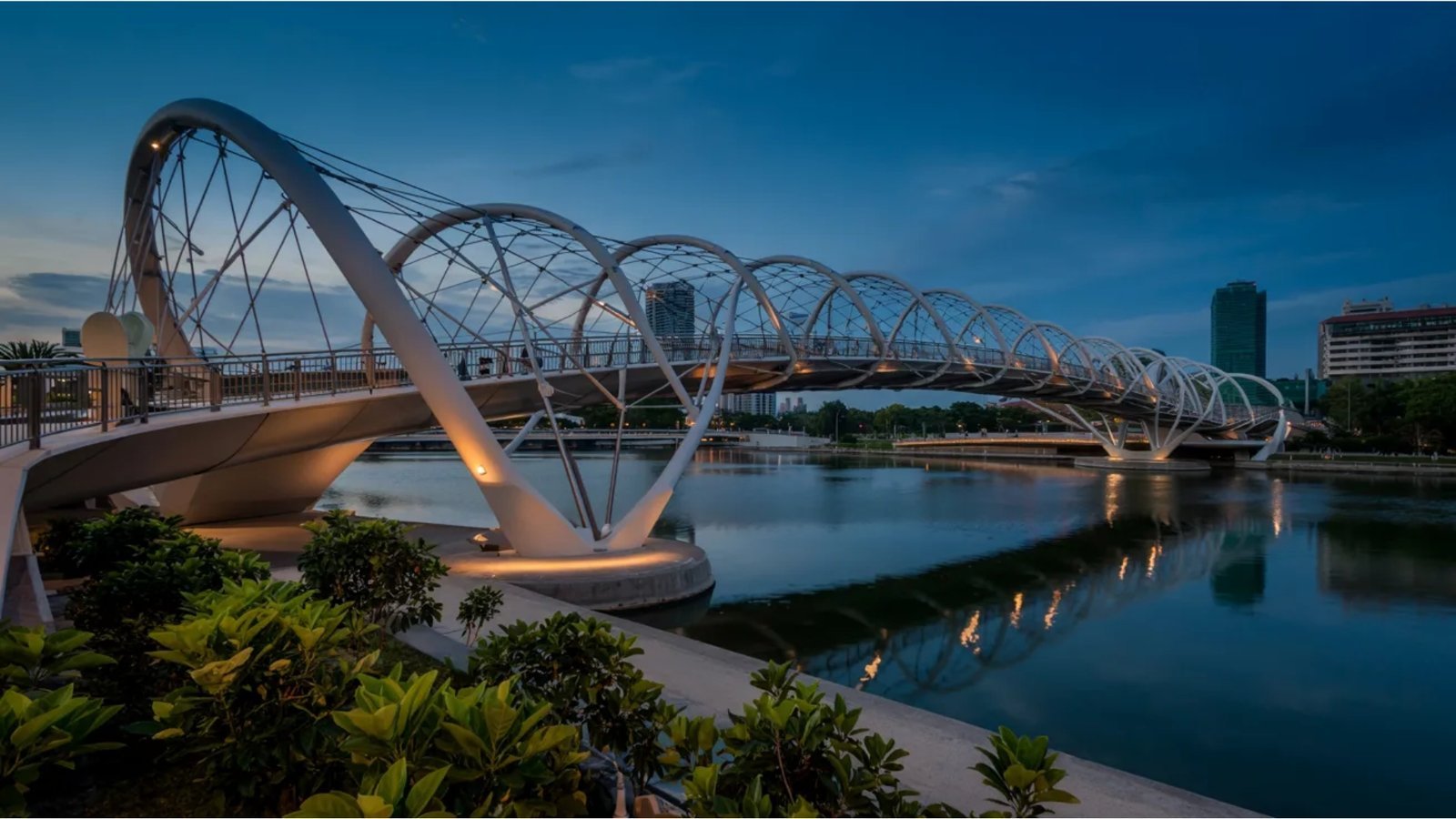
The Helix Bridge in Singapore is a marvel of modern engineering inspired by the DNA double helix. This pedestrian bridge spans 280 meters over the Singapore River. It opened in 2010, showcasing a complex stainless steel structure that twists like a giant strand of DNA. The bridge’s design symbolizes life and continuity, but it also harbors a dark tale. Two workers died on the same helix node during construction. Authorities quickly labeled this a tragic coincidence. Yet some workers claimed a curse linked to the double helix. Rumors swirled that astrologers warned the structure’s shape could cause “double death.” Whether fact or folklore, this story shadows the bridge’s gleaming surface. For more on mysterious bridge stories, see the Petronas Towers ghost skybridge.
THE OFFICIAL STORY
The Helix Bridge was built using grade 316 stainless steel for corrosion resistance and strength. It features 650 tonnes of steel and 1,000 custom glass panels with LED lighting. The construction took 4 years, finishing in 2010, and employed over 300 workers at peak times. Safety records show two fatal accidents at the same node where the helices intersect. The first death occurred in 2008, the second in 2009. Both were reported as falls from height during welding operations. Authorities investigated and found no structural faults or negligence. They ruled the deaths as unrelated accidents and coincidental in location. The bridge opened on schedule and quickly became a tourist icon. Official reports emphasize strict safety protocols and high engineering standards throughout the project.
THE CONSPIRACY
The deaths at the helix node sparked rumors among workers and locals. According to unverified accounts, astrologers warned the double helix design would bring “double death.” Workers claimed the node was cursed, linking the intertwined spirals to fatal energy. Some said the bridge’s shape disturbed natural forces. These stories remain disputed by engineers and authorities. No scientific evidence supports the curse. Yet the coincidence of two deaths at one small node fuels ongoing suspicion. In one account, a worker refused to work near that node after the first fatality. The notion of a “DNA curse” became a persistent urban legend. This mystery echoes similar claims around other iconic structures. See the Gateshead Bridge hack attempt story for another bridge with a hidden controversy.
THE POSITIVE IMPACT
Despite the dark rumors, the Helix Bridge has transformed Singapore’s waterfront. It connects Marina Centre with Marina South, easing pedestrian traffic with a dedicated 6-meter-wide pathway. The bridge’s LED lighting system enhances Singapore’s cityscape at night, drawing tourists and locals alike. It serves as a prime example of combining art and engineering. The double helix design promotes public interest in science and biology through architecture. The project also boosted local jobs and skills in advanced steel fabrication and lighting technologies. Its success inspired other cities to explore biomimicry in infrastructure. Overall, the bridge stands as a symbol of innovation and urban renewal in Singapore.
THE BURIED INVENTION
The Helix Bridge’s construction incorporated a plausible construction secret: a modular prefabrication technique for the helix segments. Each steel piece was precision-cut and assembled offsite to ensure perfect alignment of the spirals. This minimized onsite welding time and improved safety. The bridge also used a unique tensioning system to stabilize the spirals under load and wind speeds up to 45 km/h. This invention remains little known outside engineering circles but was critical to the bridge’s success. It allowed complex geometry to be built with unprecedented accuracy. Such innovation set new standards for curved steel pedestrian bridges worldwide.
HUMAN COST & UNTOLD STORIES
The two worker deaths highlight the hidden human cost behind the Helix Bridge’s beauty. Both men died from falls during welding at heights exceeding 15 meters. Workers claim safety conditions were sometimes rushed to meet tight deadlines. Some allege inadequate fall protection equipment. The families received compensation but no public memorials exist. According to unverified accounts, some workers still avoid the helix node, fearing bad luck. These stories remind us that engineering marvels often come with sacrifice. The bridge’s elegance masks the risks faced daily by its builders. Their stories deserve recognition alongside the structure’s fame.
THE LEGACY
The Helix Bridge remains a beloved Singapore landmark and engineering achievement. Yet the DNA curse story lingers in public imagination. WHAT NO ONE ASKS: Why did regulators approve the design despite worker fears? WHAT NO ONE ASKS: Why was the truth about the deaths not fully disclosed? The bridge’s legacy is twofold: a symbol of innovation and a cautionary tale about worker safety and cultural beliefs. For more on bridges with complex legacies, visit the Petronas Towers ghost skybridge.
COMPARISON TO SIMILAR STRUCTURES
- Petronas Towers — Another iconic bridge with rumored hauntings and worker tales.
- Gateshead Bridge — Known for a high-profile security breach and safety concerns.
- Slauerhoffbrug — A flying bridge with engineering failures and public controversy.
THE LESSON
Engineering marvels must never overshadow human safety and respect for worker concerns. Transparency saves lives.
CALL TO ACTION
Subscribe to our newsletter for more untold engineering dark stories.
Leave a Reply