Raffles City Chongqing
INTRODUCTION
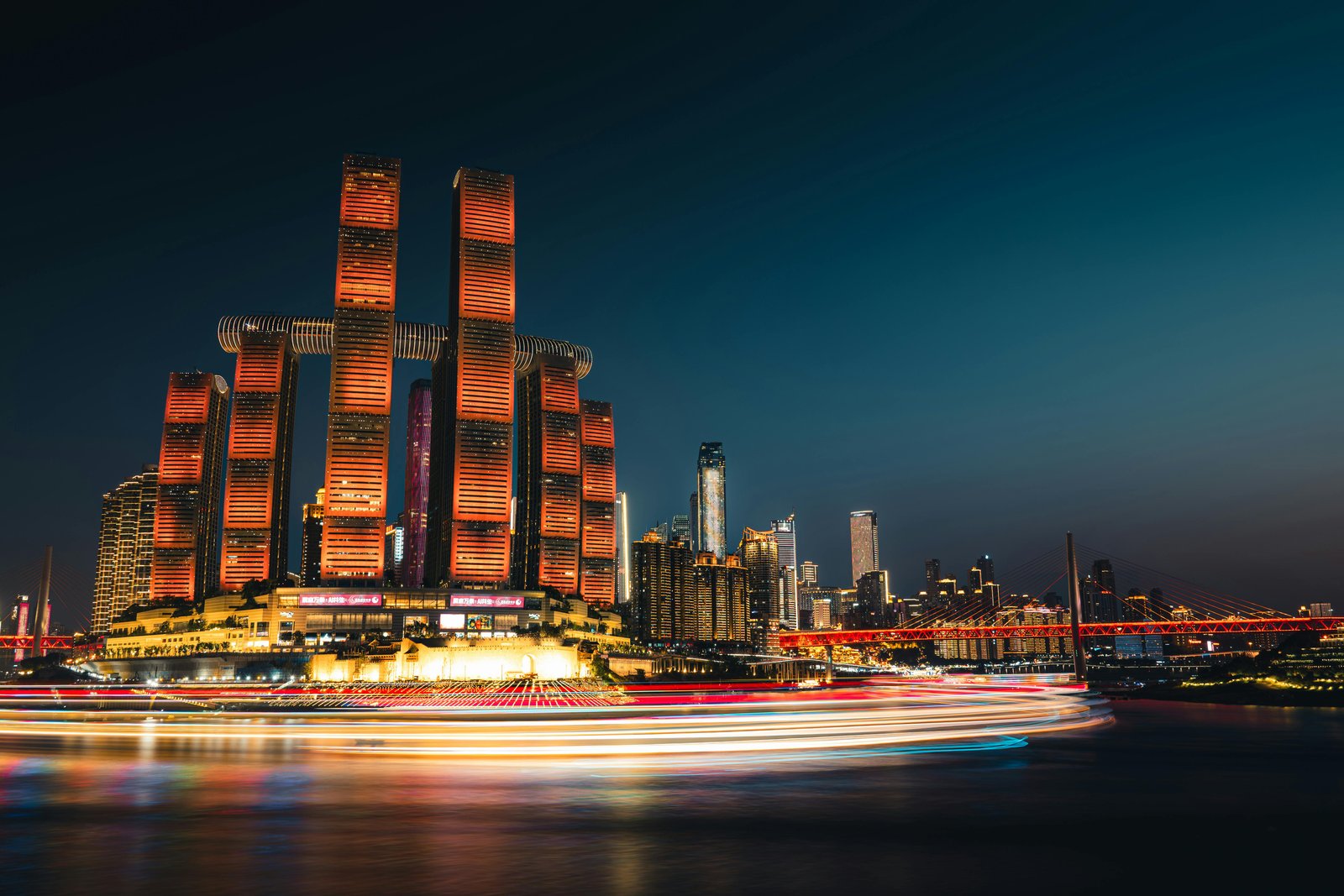
Raffles City Chongqing is a marvel of modern architecture and engineering. This complex in China’s Chongqing city features eight skyscrapers, capped by a horizontal skybridge stretching 300 meters across the Yangtze River. The skybridge is a spectacle, often called a “horizontal skyscraper” due to its length and scale. It represents bold innovation in urban design and high-tech construction.
But beneath the futuristic allure, controversy brews. The skybridge swayed 1.5 meters during a severe storm in 2022, sparking viral videos and public alarm. Officials quickly declared the movement “within design parameters,” yet evacuated occupants for safety for an entire week. This incident exposed cracks in the official narrative and raised questions about the true stability of the structure. Some workers claim the sway was worse than admitted, a plausible construction secret hidden behind polished PR.
For comparison, other mega projects like the Marina Bay Sands Skypark have faced their own engineering challenges, reminding us that cutting-edge design comes with risks.
THE OFFICIAL STORY
Raffles City Chongqing was completed in 2019 after 6 years of construction. The skybridge, called “Crystal,” is 300 meters long and sits 250 meters above ground, connecting eight towers. It is made from steel and reinforced concrete, designed to withstand wind speeds up to 45 meters per second, equivalent to a strong typhoon.
The developers and engineers stated the skybridge was built with advanced damping systems and expansion joints to absorb movement. According to official reports, the 1.5-meter sway during the 2022 storm was within the safety margins set during design. The evacuation was a precaution due to heavy rains and potential landslides around the complex, not structural failure.
They emphasized the use of Grade 50 steel and high-strength concrete (C50/60) in the skybridge’s construction. The structure passed all government safety inspections and was certified for occupancy in 2019. Officials maintain that the public is safe and the building meets all international standards.
THE CONSPIRACY
Despite official reassurances, rumors and worker accounts suggest a more troubling reality. Workers claim the skybridge experienced excessive movement during storms even before completion. Some allege shortcuts were taken to speed up construction, including using lower-grade steel in some sections and insufficient concrete curing times.
In one account, workers describe nighttime inspections where engineers hastily reinforced parts of the skybridge with steel cables. These claims remain disputed but fuel suspicion about hidden weaknesses. The viral video of the swaying bridge intensified fears, leading some to question if the evacuation was truly precautionary or an admission of instability.
Moreover, whistleblowers hinted at pressure from developers to downplay safety concerns to avoid costly delays. The evacuation for a full week was unusual and not explained in detail, raising speculation that repairs or reinforcements were needed urgently. This plausible construction secret ties into a wider pattern seen in other Chinese megastructures.
For context, the Shanghai Tower also faced rumors of hidden military floors and undisclosed structural modifications, showing how mega projects sometimes conceal critical details from the public.
THE POSITIVE IMPACT
Despite controversy, Raffles City Chongqing represents a leap in urban design and engineering. The horizontal skybridge creates a new kind of public space 250 meters above ground, with retail, hotels, and panoramic views. It connects eight towers and redefines how cities can expand vertically and horizontally.
The complex has become an icon of Chongqing’s modernization and a tourist attraction. It has boosted local economy and inspired architects worldwide to rethink skyscraper design. The daring nature of the skybridge pushes engineering boundaries, encouraging innovation in materials and construction techniques.
Its structural systems, including tuned mass dampers and flexible joints, are studied in engineering schools as examples of coping with extreme forces. The project has advanced knowledge in mega-structure connectivity and wind resistance.
THE BURIED INVENTION
One buried invention in Raffles City’s skybridge is its unique hybrid structural system. Engineers combined steel trusses with post-tensioned concrete slabs in a way rarely seen on this scale. This hybrid approach allowed the skybridge to be longer and lighter than traditional concrete-only spans.
The design includes a concealed damping mechanism embedded within the trusses that reduces sway by up to 30% during high winds. This device was a closely guarded innovation, not widely publicized to avoid copycats. It represents a breakthrough in horizontal skyscraper stability.
However, the effectiveness of this system during the 2022 storm remains disputed. Some experts argue the 1.5-meter sway was larger than expected for such damping technology, suggesting potential flaws or incomplete implementation. The invention’s true performance is still under review by independent engineers.
HUMAN COST & UNTOLD STORIES
Behind the gleaming towers are stories of hundreds of workers who built Raffles City Chongqing. Official numbers say 1,200 workers were involved, working up to 12-hour shifts in challenging conditions. Workers allegedly faced pressure to meet tight deadlines and sometimes had to work during unsafe weather.
There are unverified accounts of injuries during skybridge assembly, including falls and equipment accidents. Some workers claim inadequate safety gear was provided. The full human cost remains hidden, as many labor reports are censored or unreported.
The evacuation in 2022 also displaced hundreds for seven days. Residents reported stress and uncertainty, with limited communication from authorities. This incident revealed the vulnerability of those living inside experimental structures.
THE LEGACY
Raffles City Chongqing will be remembered as a bold architectural feat and a cautionary tale. It pushed vertical living to new dimensions but exposed risks in experimental designs. The viral sway incident raised awareness about structural transparency and occupant safety.
WHAT NO ONE ASKS: Why did regulators approve the design without more public debate? HOW WILL FUTURE MEGASTRUCTURES ADDRESS SWAY AND SAFETY?
Its legacy also includes influencing future mega projects to incorporate better safety communication and monitoring systems. The incident sparked discussion about balancing innovation with public trust.
For further insight into controversial construction legacies, see the story of the Bird’s Nest steel curse, another Chinese landmark with hidden problems.
COMPARISON TO SIMILAR STRUCTURES
- Marina Bay Sands Skypark — Another horizontal skybridge with reported cracking issues under heavy loads.
- Shanghai Tower — Mega skyscraper rumored to have secret floors and undisclosed structural tweaks.
- Bird’s Nest Steel Curse — Famous for steel quality controversies and costly repairs.
THE LESSON
Innovation must never outpace safety. Transparency and rigorous oversight protect lives and trust in engineering marvels.
CALL TO ACTION
Subscribe to our newsletter for more untold engineering dark stories and exclusive insider investigations.
Leave a Reply