
CERN Large Hadron Collider
INTRODUCTION
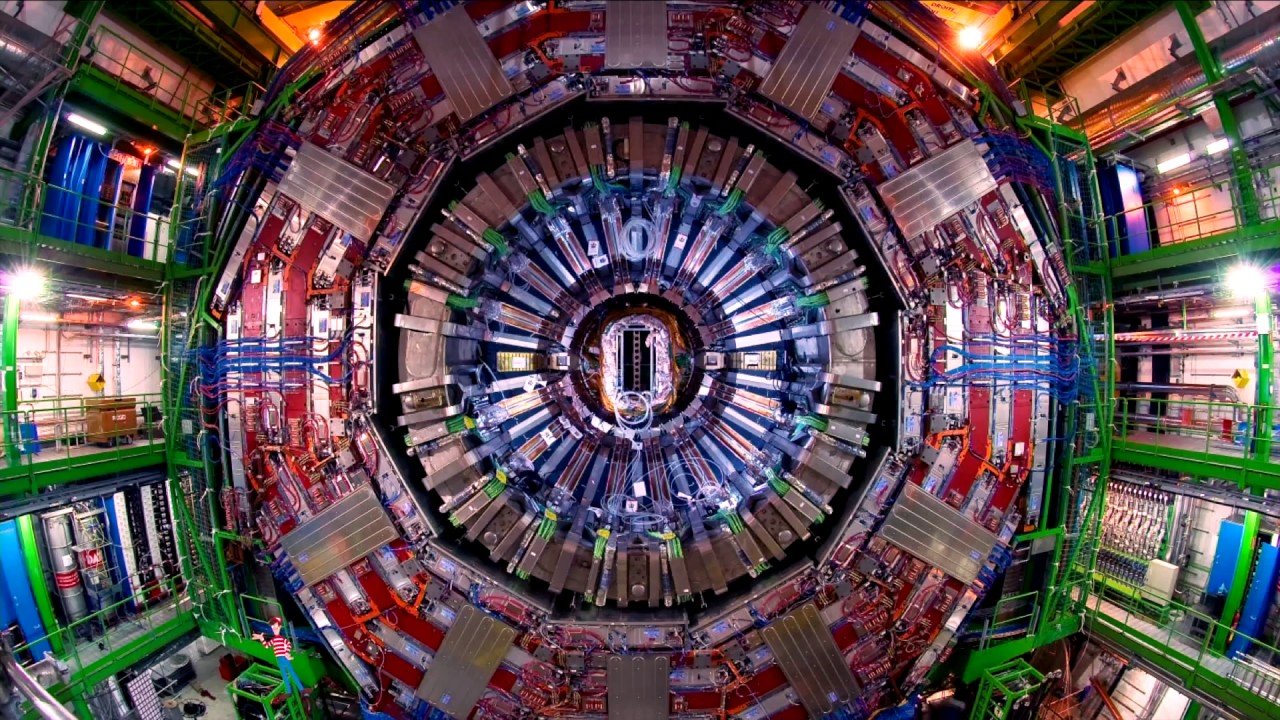
The Large Hadron Collider (LHC) at CERN is a marvel of underground engineering. It stretches 27 kilometers beneath the Franco-Swiss border near Geneva. This high-tech particle accelerator probes the origins of the universe. The project involved thousands of experts and workers from around the world. The LHC uses superconducting magnets cooled to minus 271 degrees Celsius, a feat of extreme engineering. Its construction required drilling through hard rock and precise alignment to within millimeters. The LHC’s complexity drew both admiration and fear. Allegedly, a lawsuit emerged before its startup claiming the collider could create black holes that might swallow Earth. This panic captured global attention. In one account, workers also reported a magnet quench in 2008 that caused a massive helium leak. Rumors circulated about strange effects in the tunnel, including an alleged time slip. The LHC’s story is not just about science but human drama. For a glimpse of other underground engineering whispers, see the Gotthard Tunnel Mountain Whispers.
THE OFFICIAL STORY
The LHC officially opened in 2008 as the world’s largest and most powerful particle accelerator. Its goal was to collide protons at energies of 7 tera-electronvolts (TeV) to explore fundamental physics. The tunnel lies between 50 and 175 meters underground. Construction began in 1998 and involved boring through molasse rock using tunnel boring machines. The structure includes thousands of magnets cooled by liquid helium to 1.9 Kelvin, colder than outer space. The 2008 magnet quench was a severe accident where a sudden loss of superconductivity caused magnets to heat rapidly. This led to a rupture in the helium cooling system and a large helium leak. CERN shut down operations for repairs, costing millions and months of delay. The collider resumed safely in 2009 with improved safety measures. CERN maintains strict transparency about all incidents and safety protocols. Experts confirm no credible risk of black holes destroying Earth. The LHC has operated safely, producing significant scientific discoveries including the Higgs boson in 2012.
THE CONSPIRACY
The LHC’s black hole lawsuit remains a dramatic chapter. In 2008, a group filed a legal injunction alleging the collider could create micro black holes that would grow uncontrollably. While dismissed by courts, the lawsuit fueled public fear and media frenzy. Workers claim that behind the scenes, the helium leak during the magnet quench was far worse than admitted. Some allege the leak caused temporal distortions or “time slips” in the tunnel. According to unverified accounts, workers experienced strange phenomena like lost time and shifts in spatial perception. These claims remain disputed and lack scientific evidence. The rumors echo older tales of hidden dangers in massive engineering projects. A plausible construction secret may involve undisclosed stress fractures in the tunnel lining caused by the quench explosion. The LHC’s intense magnetic fields and cryogenic systems remain a breeding ground for speculative stories. For more on mysterious underground events, visit CERN Atlas Sneeze Sabotage.
THE POSITIVE IMPACT
Despite controversies, the LHC has revolutionized particle physics. It confirmed the existence of the Higgs boson, explaining how particles acquire mass. The collider’s discoveries help deepen our understanding of the universe’s origins. CERN’s technologies have applications beyond physics, including medical imaging and cancer treatment. The project pushed boundaries in cryogenics, vacuum engineering, and superconductivity. Thousands of scientists collaborate globally, fostering international cooperation. The LHC’s data also inspired advances in computing and big data analysis. The facility serves as a training ground for engineers and physicists worldwide. It proves that massive, complex engineering can achieve extraordinary goals. The LHC stands as a symbol of human curiosity and technical excellence, overcoming fear through knowledge.
THE BURIED INVENTION
During the LHC’s construction, engineers developed innovative superconducting magnet designs. These magnets operate at 1.9 K using superfluid helium, a breakthrough in cryogenics. The magnets can generate magnetic fields up to 8.3 Tesla, crucial for bending particle beams at high energies. This technology set new standards for precision and stability in accelerator magnets. The LHC also pioneered advanced beam alignment techniques, achieving tolerances of a few microns over 27 kilometers. The cooling system itself is a masterpiece, circulating 120 tons of liquid helium. These inventions remain classified in some technical details due to their strategic importance. They influenced later accelerators and industrial cryogenic applications. While the helium leak in 2008 was a setback, it spurred improvements in safety valves and pressure release systems. The LHC’s buried inventions represent decades of incremental but revolutionary progress in underground engineering and particle physics instrumentation.
HUMAN COST & UNTOLD STORIES
The LHC’s construction demanded intense labor under challenging conditions. Workers drilled deep tunnels with precision, often working at night to meet tight schedules. Allegedly, some workers faced safety risks during the magnet installation phase. The 2008 magnet quench caused a dangerous helium release, and emergency crews rushed to contain it. Workers claim the incident caused temporary health issues due to helium exposure. Stress and fatigue were common due to long shifts and complex tasks. Rumors of unexplained phenomena in the tunnel added psychological strain. Despite strict safety protocols, the underground environment posed hazards such as rock falls and confined spaces. The human cost includes not only physical risks but mental pressure from working in a secretive, high-stakes environment. These stories rarely reach public awareness, overshadowed by scientific achievements. The LHC’s workforce remains a hidden pillar of its success and resilience.
THE LEGACY
The LHC’s legacy is a blend of scientific triumph and public controversy. It transformed particle physics and confirmed fundamental theories. Yet, it also left lingering questions about risk and transparency. WHAT NO ONE ASKS: Why did regulators approve the design despite black hole fears? Another question: WHO BEARS THE RISKS when technology ventures into unknown realms? The LHC inspires new generations of scientists and engineers to pursue big questions. It also serves as a cautionary tale about managing public fears in cutting-edge projects. The collider’s story intertwines with those of other engineering marvels. For a related tale on underground engineering drama, see Channel Tunnel Fire Fraud.
COMPARISON TO SIMILAR STRUCTURES
- CERN Atlas Sneeze Sabotage — Another CERN underground mystery with rumored sabotage and technical challenges.
- Gotthard Tunnel Mountain Whispers — Long Alpine tunnel with its own engineering secrets and worker tales.
- Channel Tunnel Fire Fraud — Cross-channel tunnel with contested safety incidents and conspiracy rumors.
THE LESSON
Complex engineering projects demand transparency and respect for public fears. Ignoring these fuels rumors and distrust.
CALL TO ACTION
Subscribe to our newsletter for more untold engineering dark stories.
Leave a Reply