
Gateshead Millennium Bridge
INTRODUCTION
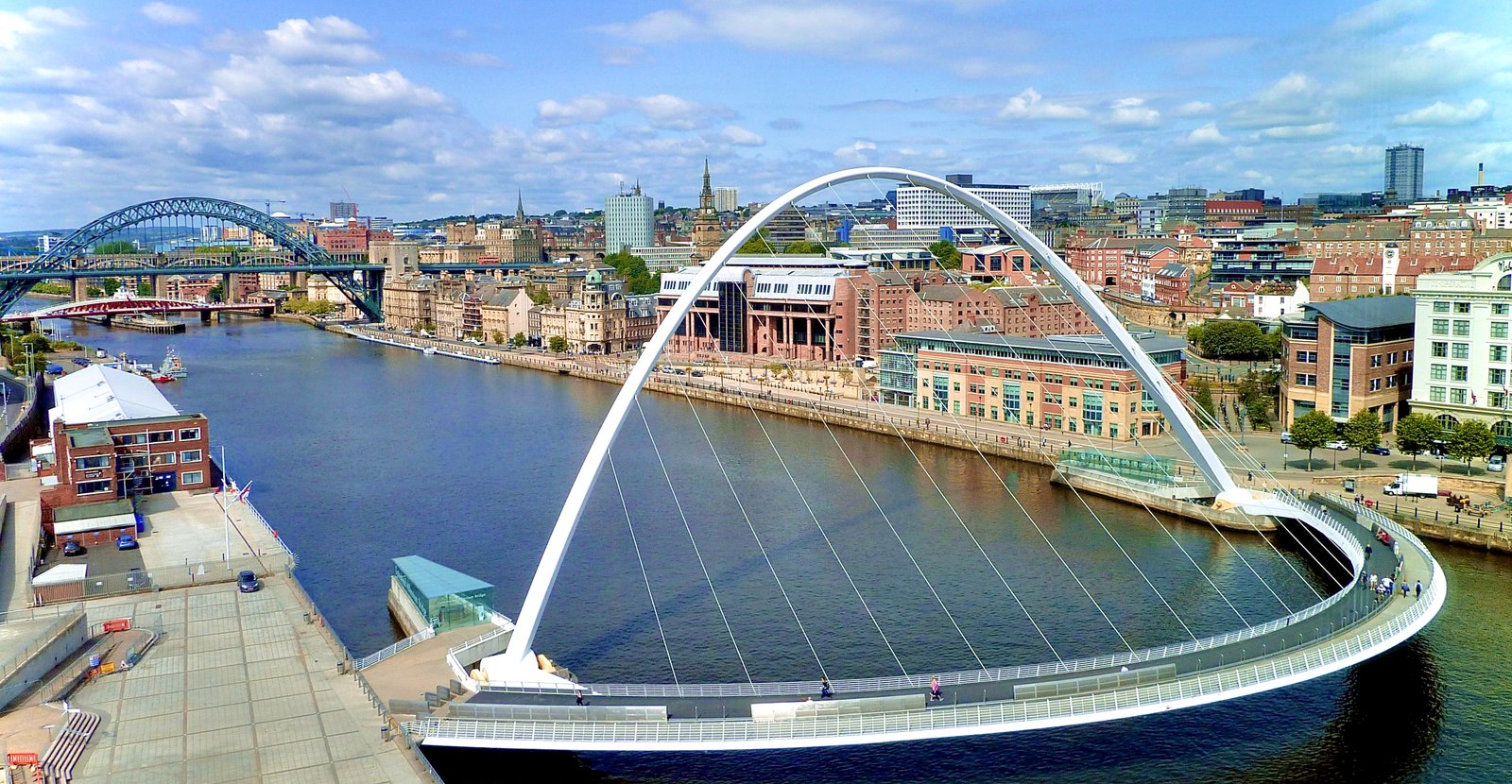
The Gateshead Millennium Bridge spans the River Tyne, linking Gateshead and Newcastle in the United Kingdom. Officially opened in 2001, it is famous for its innovative tilting mechanism designed to let ships pass. The bridge’s sleek, curved design earned it the nickname “Winking Eye.” It uses hydraulics to tilt the pedestrian and cycle deck upward by 40 degrees, a technical marvel at 105 meters long and weighing approximately 850 tons.
Despite its elegance, the bridge’s opening day was marred by a mysterious incident. The hydraulics froze mid-tilt for 45 minutes, leaving many spectators puzzled. Workers claim this was no mere mechanical failure. Allegedly, a remote hack attempt disrupted the control system, a plausible construction secret never publicly confirmed.
This hidden episode is a reminder that even celebrated engineering feats can hide dark stories. For more on unusual bridge troubles, see the Slauerhoffbrug Flying Bridge Fail.
THE OFFICIAL STORY
The official narrative states the Gateshead Millennium Bridge’s hydraulic system experienced a temporary mechanical fault during its first public tilting demonstration. The bridge was designed with two large hydraulic rams, each powered by 55 kW motors, to raise the 850-ton span smoothly. The tilt takes around four minutes to complete a full 40-degree rotation.
Engineers reported that a sensor glitch caused the control system to halt the hydraulic pumps automatically as a safety precaution. The bridge remained stuck for 45 minutes while technicians diagnosed the problem. There were no injuries or structural damage.
The bridge’s design includes redundant safety features and manual override capabilities. Official investigations concluded a software bug combined with a sensor failure caused the freeze. The bridge reopened fully operational shortly afterward and continues to serve thousands daily.
This explanation aligns with standard engineering challenges faced by cutting-edge structures. However, some workers and insiders remain skeptical about the simplicity of this account.
THE CONSPIRACY
On opening day, many locals joked that “alien interference” caused the hydraulic freeze. This was more than mere humor. According to unverified accounts, security logs later revealed a remote hack attempt targeting the bridge’s control system.
The bridge uses a networked computer system to manage its hydraulic pumps and sensors. This made it vulnerable to cyber intrusions, a fact not widely publicized at the time. The hack attempt allegedly came from an unknown IP address, possibly exploiting outdated software vulnerabilities.
Workers claim the incident was hushed up to avoid public panic and protect the bridge’s reputation. This remains disputed by official sources who deny any cyberattack occurred. However, whistleblowers allege internal memos discussed the hack quietly.
The event exposed how modern infrastructure can be compromised without physical sabotage. It echoes concerns about other tilting bridges worldwide, such as the Helix Bridge DNA Curse where unexplained malfunctions fuel rumors. The Gateshead case is a plausible construction secret showing technology’s double edge.
THE POSITIVE IMPACT
Despite the opening day hiccup, the Gateshead Millennium Bridge has been a huge success. It revitalized the riverside area and became a symbol of modern engineering in the North East. The bridge attracts millions of tourists annually and encourages walking and cycling across the river.
Its innovative tilting design paved the way for new bridge concepts worldwide. Engineers learned valuable lessons about integrating hydraulics with computerized controls. Safety protocols were improved to prevent future freezes or cyber intrusions.
Local businesses flourished due to increased foot traffic. The bridge’s aesthetic appeal was recognized with several design awards, boosting regional pride. The incident also raised awareness about infrastructure cybersecurity, prompting upgrades in many public projects.
In the long term, the bridge promotes sustainable urban transport and connects communities in ways no fixed bridge could.
THE BURIED INVENTION
The Gateshead Millennium Bridge features a buried invention rarely discussed: its unique rotating axis system. Unlike traditional bascule or swing bridges, it tilts on a single pivot axis concealed below the deck. This axis uses precision bearings designed to handle a vertical load of 850 tons and lateral wind speeds up to 40 meters per second.
The hydraulic rams operate in tandem with a computer-controlled feedback loop, adjusting tilt speed based on real-time sensor data. This system was pioneering in 2001, integrating mechanical engineering with early smart control technology.
The bridge’s design includes a custom concrete foundation made with C40/50 grade concrete to support dynamic loads during tilting. This foundation remains largely unseen but critical.
While the bridge’s overall concept is public, the exact software algorithms controlling the hydraulics remain proprietary. Allegedly, these algorithms were modified post-incident to block external access, a plausible construction secret guarding against future cyberattacks.
HUMAN COST & UNTOLD STORIES
The bridge’s construction involved over 150 workers, including engineers, welders, and concrete specialists. Working on the riverfront posed risks from shifting tides and high winds. Some workers allege that safety protocols were occasionally overlooked to meet tight deadlines for the 2001 opening.
Though no major accidents were officially reported, rumors persist of minor injuries and near misses during installation of the heavy hydraulic components. Workers recall long shifts under pressure to test and calibrate the tilting mechanism.
The frozen tilt incident added stress, as operators scrambled to regain control in front of a large crowd. Some engineers reportedly faced blame despite the fault being linked to cyber vulnerabilities beyond their control.
These untold stories highlight the human element behind the sleek structure. The bridge’s success came at more than just financial cost—it tested the limits of its workforce’s endurance and resilience.
THE LEGACY
The Gateshead Millennium Bridge remains a beloved landmark, but its legacy carries lessons on technology and trust.
WHAT NO ONE ASKS: Why did regulators approve the design without stronger cybersecurity measures?
WHAT NO ONE ASKS: How prepared are other tilting bridges for similar cyber threats?
The event sparked wider discussions about protecting critical infrastructure from remote attacks. It also inspired engineers to rethink safety beyond physical hazards.
For a look at bridges with their own dark pasts, visit Erasmus Bridge Cable Snap.
The Gateshead bridge’s story is a reminder that even celebrated engineering wonders can hide secrets. It challenges us to question what else might be buried beneath the surface.
COMPARISON TO SIMILAR STRUCTURES
- Slauerhoffbrug Flying Bridge Fail — Another tilting bridge that faced mechanical failure soon after opening.
- Helix Bridge DNA Curse — A pedestrian bridge plagued by unexplained malfunctions and rumors of sabotage.
- Erasmus Bridge Cable Snap — Famous for a cable failure that exposed design vulnerabilities.
THE LESSON
Advanced engineering demands equal focus on cybersecurity. Ignoring digital threats risks public safety and trust in vital infrastructure.
CALL TO ACTION
Subscribe to our newsletter for more untold engineering dark stories and hidden secrets behind iconic structures.
Leave a Reply