
Kansai International Airport
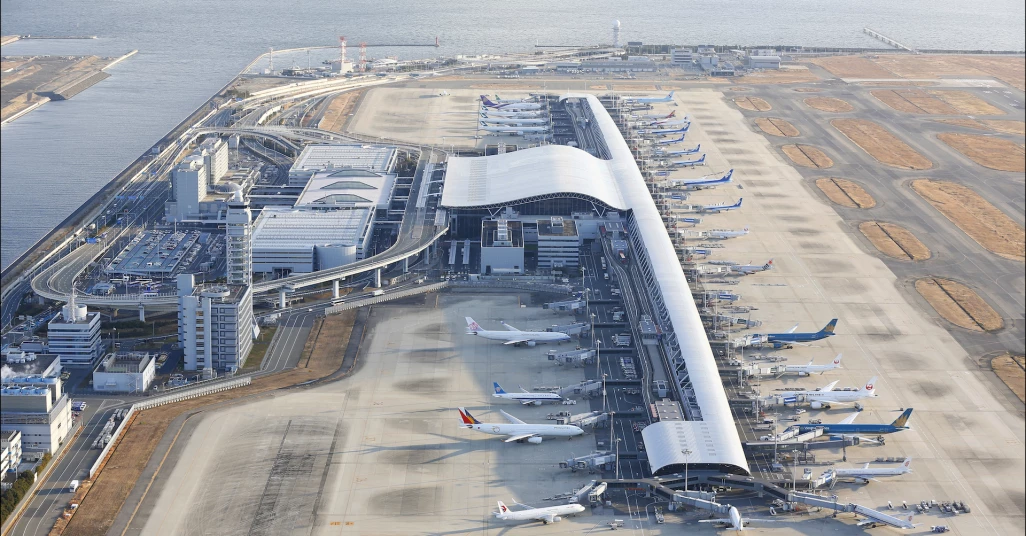
INTRODUCTION
Kansai International Airport stands as a marvel on a MAN-MADE island in Osaka Bay. This engineering feat was designed to withstand the region’s fierce typhoons and shifting seabed. Built between 1987 and 1994, it was supposed to be a symbol of resilience and innovation. Yet, the island has sunk 38 feet—double the original 19 feet predicted. This alarming fact fuels rumors and conspiracies. Some workers claim foundation columns were installed upside down, weakening the entire structure. While these claims remain disputed, they cast a long shadow over this massive project. This airport is not the only controversial island build. See how it compares to the Palm Jumeirah erosion cover-up, another man-made island with hidden struggles.
THE OFFICIAL STORY
Kansai International Airport was constructed on a 4-square-kilometer artificial island. Engineers used around 180,000 concrete piles driven deep into the seabed. Each pile is about 20 meters long, designed to support the weight of the runways and terminals. The island’s sinking was anticipated and planned for. Designers expected a gradual settlement of about 19 feet over decades. They built with concrete grades designed to resist corrosion from seawater and typhoon winds reaching 90 knots. Construction involved over 10,000 workers and cost approximately $20 billion. The airport opened in 1994, hailed as a triumph of modern engineering and Japan’s gateway to the world. Officially, the sinking remains within safe limits, monitored by constant surveys. No public documents confirm the upside-down column claim. The story focuses on technological challenges, not human error.
THE CONSPIRACY
Allegedly, a secret report leaked in the early 2000s exposed grave construction errors. It claims that foundation columns on nearly 300 piles were installed upside down. This would compromise their load-bearing capacity and accelerate sinking. Workers who helped drive piles tell in one account that time pressure and cost-cutting led to rushed inspections. Some piles may have been mistakenly reversed, placing thinner ends in the seabed and thicker ends on top. This remains disputed by engineers who argue that such a mistake would be quickly detected. Yet, the island has sunk 38 feet instead of the predicted 19. Some believe the true cause is a plausible construction secret hidden by officials to avoid scandal. The sinking threatens runway stability and requires constant costly maintenance. This conspiracy echoes issues seen in projects like the Hong Kong-Zhuhai-Macao sinkhole, where foundation failures were also hushed up.
THE POSITIVE IMPACT
Despite its flaws, Kansai International Airport revolutionized air travel in Japan. It relieved overcrowding at Osaka’s older airports and boosted regional economies. The airport handles over 28 million passengers annually with state-of-the-art facilities. Its location on an artificial island reduces noise pollution for nearby residents. It also showcases Japan’s mastery of marine engineering. The airport has withstood multiple typhoons and earthquakes, proving remarkable durability. The sinking has not yet compromised flight safety. Ongoing engineering efforts keep the island stable and functional. Kansai serves as a model for future offshore infrastructure worldwide, inspiring innovations in pile-driving technology and island reclamation.
THE BURIED INVENTION
Behind the scenes, engineers developed a unique pile system for Kansai. It used reinforced concrete piles with embedded steel cores to resist bending and corrosion. The piles were coated with a special epoxy layer protecting against seawater damage. A pioneering monitoring system was installed to track sinking and stress in real-time using sensors embedded in the foundation. This technology was groundbreaking in the 1980s and influenced later projects. Despite rumors of mistakes, this invention shows that Kansai pushed the boundaries of engineering knowledge. It remains a testament to Japan’s ability to innovate under extreme conditions. Many of these technical advances remain classified or little-known to the public.
HUMAN COST & UNTOLD STORIES
Thousands of workers labored in challenging conditions to build Kansai Airport. Many faced long hours, typhoon winds, and hazardous marine work. Allegedly, some accidents during pile installation went unreported. Workers claim fatigue and pressure to meet deadlines compromised safety. The psychological toll of working on a sinking island remains untold. Families of laborers worry about health effects from prolonged exposure to concrete dust and saltwater. While official records list few injuries, unverified accounts hint at ignored safety violations. The airport’s story is not only about concrete and steel but also about the human lives behind the construction. Their sacrifices built a gateway that still connects millions.
THE LEGACY
Kansai International Airport’s legacy is complex. It symbolizes technological daring and economic ambition. Yet, it also raises questions about transparency and engineering ethics. WHAT NO ONE ASKS: Why did regulators approve the design despite sinking concerns? WHAT NO ONE ASKS: How deep does the alleged cover-up run? The airport still functions as a vital transport hub. However, the hidden controversies linger. This story is a warning for future mega-projects. Transparency and rigorous oversight must prevail over secrecy. Learn more about similar challenges in Masdar City’s ghost drama. Kansai’s story will be studied by engineers and historians for decades.
COMPARISON TO SIMILAR STRUCTURES
- Palm Jumeirah erosion cover-up — Another artificial island facing hidden foundation issues and environmental threats.
- Hong Kong-Zhuhai-Macao sinkhole — Foundation failure caused sudden ground collapse, raising safety concerns.
- Masdar City ghost drama — A futuristic city project plagued by construction delays and rumored design flaws.
THE LESSON
Engineering marvels demand transparency. Ignoring warnings and hiding errors risks human safety and trust. The truth beneath Kansai’s sinking island is a cautionary tale.
CALL TO ACTION
Subscribe to our newsletter for more untold engineering dark stories and hidden construction secrets.
Leave a Reply