
Mercedes-Benz Stadium
INTRODUCTION
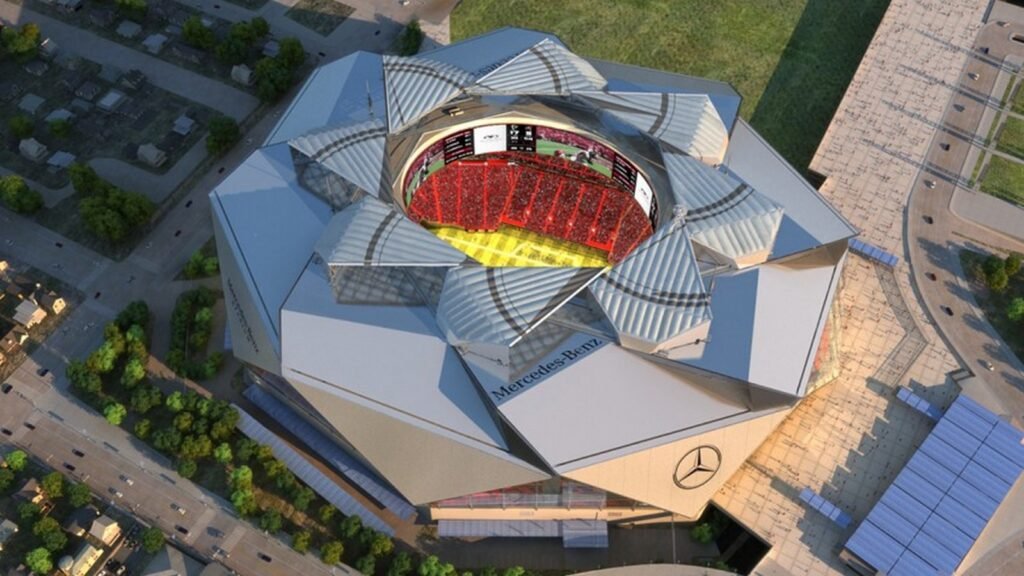
The Mercedes-Benz Stadium in Atlanta is a marvel of modern architecture. Its roof, designed to mimic a camera aperture, opens and closes with robotic precision. This stadium is more than a sports venue; it represents a leap in sustainable design and engineering innovation. The roof’s unique retractable system uses 8 massive panels that rotate to let in natural light and air, helping reduce energy use. Yet, the stadium’s story is not just about engineering brilliance. It is also about rivalry and controversy. On its opening day in 2017, the roof jammed halfway during the game. This incident sparked blame on a software glitch, but whispers of sabotage by a rival stadium circulated behind the scenes. For a detailed look at other iconic structures and their hidden stories, see the story of The Vessel’s suicide ledges.
THE OFFICIAL STORY
The official explanation for the roof malfunction at Mercedes-Benz Stadium points to a SOFTWARE GLITCH. The roof, made of 8 triangular panels, operates like a giant camera aperture. It takes approximately 8 minutes to fully open or close, controlled by a sophisticated software system. On August 26, 2017, during the Falcons’ opening game, the roof stopped moving halfway. Engineers quickly identified a bug in the control software that caused the system to halt as a safety measure. The company responsible for the software released a patch days later. Officials insisted the glitch was a rare anomaly, emphasizing the stadium’s advanced design and sustainability features. The roof’s panels are made from lightweight steel and glass composites designed to withstand winds up to 180 km/h. The stadium uses rainwater harvesting and solar panels, making it one of the greenest sports venues globally. While the software glitch caused embarrassment, the stadium opened on schedule and has hosted thousands of events since.
THE CONSPIRACY
Despite the official story, rumors of a deliberate HACK persisted. Allegedly, a rival stadium sought to discredit Mercedes-Benz Stadium’s innovative roof design. Workers claim unusual cyber activity was detected around the time of the incident, but these claims remain disputed by authorities. In one account, insiders suggested that the software vulnerability was exploited to jam the roof, a plausible construction secret given the roof’s complexity. The roof’s control system runs on a proprietary network, which some say lacked robust cybersecurity measures. Rivalry among stadium owners in Atlanta and nearby cities is fierce, with billions of dollars at stake in hosting major events. The timing of the glitch – during a high-profile game – fueled suspicions. Investigations found no conclusive proof of hacking, but the incident exposed vulnerabilities in integrating cutting-edge tech with critical infrastructure. For an example of glare lawsuits caused by architectural design, see the Disney Hall glare lawsuit story.
THE POSITIVE IMPACT
Despite the controversy, Mercedes-Benz Stadium pushed the boundaries of sustainable stadium design. Its retractable roof allows natural ventilation, reducing reliance on HVAC systems. The energy-efficient LED lighting and solar panels reduce the stadium’s carbon footprint significantly. The stadium collects rainwater for irrigation and uses recycled materials in construction. It has become a model for future venues worldwide. The roof’s aperture design is an engineering feat, requiring precision movement of massive panels weighing up to 90 tons each. The stadium employs cutting-edge sensors and controls to ensure safety and smooth operation. These innovations improve fan experience and reduce operational costs. The stadium has hosted Super Bowls, college championships, and concerts, proving its adaptability. Its sustainability features earned recognition from several environmental organizations. The success of Mercedes-Benz Stadium shows how innovation and green design can coexist beautifully.
THE BURIED INVENTION
Hidden beneath the stadium’s fame lies a lesser-known invention. The retractable roof’s mechanism uses a patented radial arm system that allows the 8 panels to pivot smoothly like a camera aperture. This system uses high-strength steel cables and custom bearings designed to handle dynamic loads and wind pressures. According to unverified accounts, the original design included a secondary fail-safe system to prevent jamming, but it was allegedly removed to cut costs. Workers also claim innovations in the roof’s waterproofing system were kept secret to protect competitive advantage. This plausible construction secret helped make the roof weather-tight while maintaining its lightweight profile. The invention represents a fusion of mechanical engineering, software control, and sustainable architecture. It remains a benchmark for stadium roof technology. The buried invention’s full technical details are guarded, highlighting the competitive nature of stadium construction.
HUMAN COST & UNTOLD STORIES
The human cost of building Mercedes-Benz Stadium often goes unnoticed. Over 3,000 workers were involved, many working long hours under tight deadlines to meet the 2017 opening. Some workers allege unsafe working conditions, especially during the roof’s installation at heights exceeding 60 meters. Injuries were reported but underreported, according to worker accounts. The pressure to finish on time after delays caused by weather and design changes strained labor relations. The roof’s software glitch also created stress for operators and maintenance crews unprepared for such failures. Behind the scenes, electricians and technicians worked overtime to fix the glitch, sacrificing pay and rest. These stories highlight the human sacrifices behind a gleaming architectural icon. The stadium’s story is incomplete without acknowledging these voices.
THE LEGACY
The Mercedes-Benz Stadium has left a lasting legacy in architecture and sports. It demonstrated that sustainability and innovation could redefine stadium design. Yet, the roof glitch and hacking rumors raise questions about technology’s role in critical infrastructure. WHAT NO ONE ASKS: Why were cybersecurity measures not stronger from the start? WHAT NO ONE ASKS: How were worker safety concerns addressed during the roof’s construction? The stadium remains a symbol of Atlanta’s ambition and rivalry, pushing others to innovate and compete. For another perspective on structural challenges and public controversies, consider the Marina Bay Sands skypark cracks story.
COMPARISON TO SIMILAR STRUCTURES
- The Vessel suicide ledges — Innovative but controversial urban structure with safety concerns
- Disney Hall glare lawsuit — Architectural brilliance shadowed by glare issues and legal battles
- Marina Bay Sands skypark cracks — Engineering marvel with hidden structural problems
THE LESSON
Complex technology demands strong safeguards. Innovation without safety invites failure and risk to people.
CALL TO ACTION
Subscribe to our newsletter for more untold engineering dark stories and hidden truths behind iconic structures.
Leave a Reply