Council House 2 (CH2)
INTRODUCTION
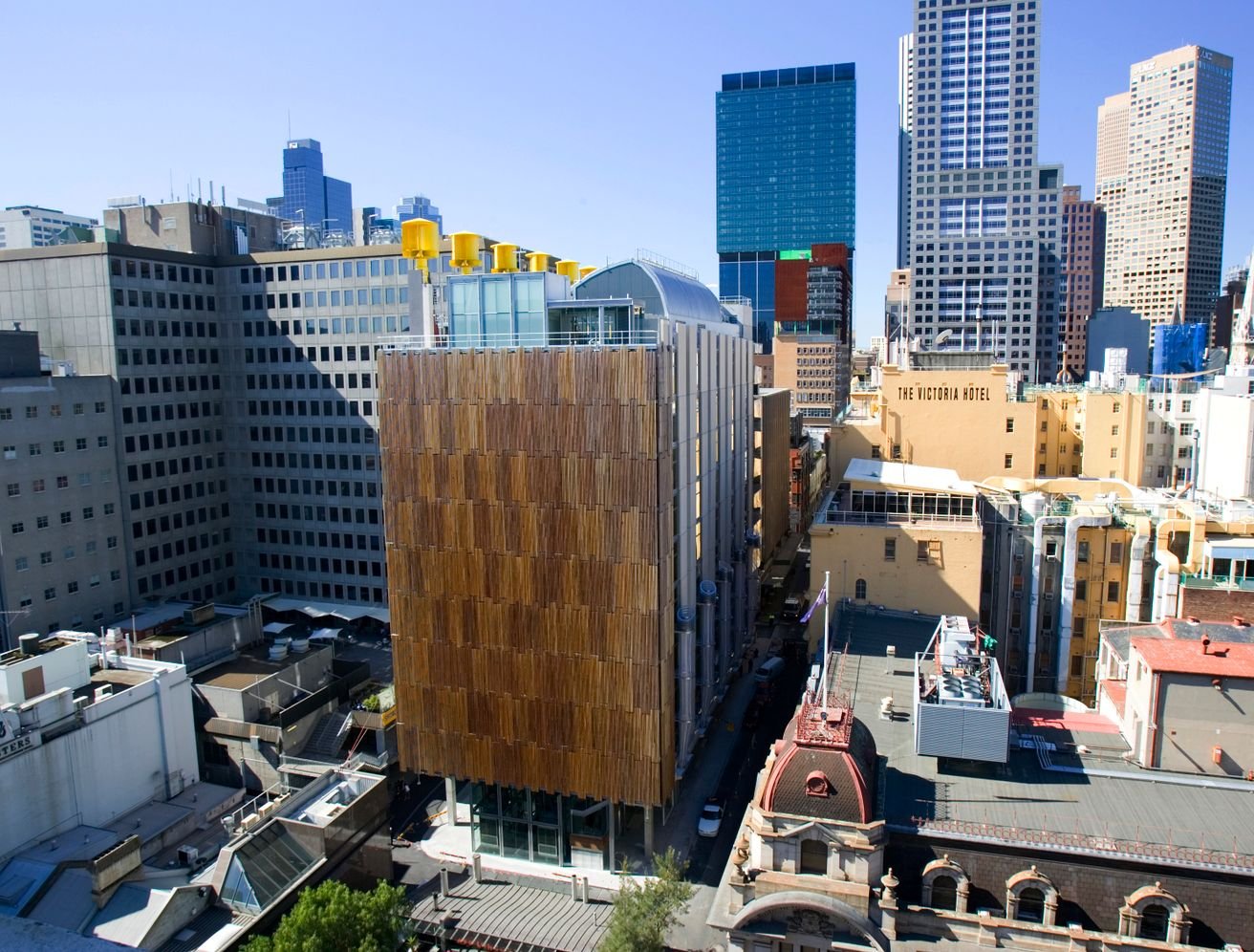
Council House 2, or CH2, stands proudly in Melbourne as Australia’s first 6-star Green Star building. It promised cutting-edge sustainability with innovative features like the shower tower cooling system. This system was designed to cool the building by spraying water mist. However, shortly after opening, the shower tower malfunctioned and drenched pedestrians on the street below for days. The incident became a local spectacle and a cautionary tale in sustainable architecture.
The official narrative focuses on the building’s many environmental achievements and minimal carbon footprint. Yet, workers claim the shower tower problem was never fully fixed. The cooling system was eventually abandoned but remains a visible feature. This failure raises questions about the reliability of green tech in harsh urban environments. For more on environmental building controversies, see Pixel Building Diesel Fraud.
THE OFFICIAL STORY
Council House 2 was completed in 2006 with a goal to lead sustainable office design. Its 10-story structure incorporates solar panels, natural ventilation, and a water recycling system. The shower tower was a key element, intended to spray fine water mist to reduce temperatures during Melbourne’s hot summers. It was hailed as an innovative passive cooling technology.
Engineers claimed the system met design specifications with water droplets atomizing effectively to cool the air. The building achieved a 6-star Green Star rating by the Green Building Council of Australia – the highest possible. Maintenance teams reportedly inspected the shower tower regularly to ensure function.
Despite these assurances, the shower tower began spraying water uncontrollably onto the sidewalk below shortly after the building opened. Pedestrians were soaked and local media covered the odd event extensively. Official statements described the issue as a temporary glitch caused by sensor failure. Repairs were promised but allegedly never fully implemented. The shower tower remains on the facade, now purely ornamental.
THE CONSPIRACY
The shower tower failure at CH2 remains disputed. According to unverified accounts from former maintenance workers, the problem was far worse than publicly admitted. They claim the cooling system malfunctioned due to a flawed valve design that allowed continuous water flow. Attempts to fix the valve reportedly caused further damage to the control system.
Workers allege management downplayed the issue to protect the building’s green certification. They say the decision to leave the shower tower spraying for a week was a cost-cutting measure, ignoring pedestrian complaints and water waste. This conspiracy suggests that the building’s sustainability image took priority over public safety and resource conservation.
Some claim the malfunction was a plausible construction secret tied to rushed timelines and untested technology. The shower tower’s water pump system used a rare low-pressure design that was not widely field-tested. Allegedly, the engineers failed to anticipate how Melbourne’s wind patterns would disperse the mist onto the street.
This story echoes other green building scandals where innovative features were abandoned after costly failures. For comparison, see the The Edge Smart Hack case, another example of cutting-edge tech with hidden flaws.
THE POSITIVE IMPACT
Despite the shower tower failure, Council House 2 set new standards for sustainable design in Australia. It demonstrated that high-performance buildings could reduce energy use by over 60% compared to conventional offices. Features like solar shading, natural ventilation, and rainwater harvesting inspired future projects nationwide.
The building became a case study in balancing innovation and practicality. Its success in achieving a 6-star Green Star rating encouraged regulatory bodies to develop clearer guidelines for sustainable architecture. CH2 also raised public awareness about green buildings and environmental responsibility.
Importantly, the shower tower episode highlighted the need for rigorous testing and maintenance of new systems. It pushed engineers to refine passive cooling technologies to avoid similar failures. Today, CH2 remains a landmark example of environmentally conscious urban design despite its quirks.
THE BURIED INVENTION
The shower tower at CH2 was based on a buried invention: an innovative low-pressure water atomization system. This system used specially designed nozzles to create ultra-fine droplets that cool air efficiently without heavy water consumption. The concept originated from research in the early 2000s aiming to replace energy-intensive air conditioning.
The technology was pioneering but remained experimental. Its integration into CH2 marked one of the first uses in a large commercial building. However, the system required precise calibration and was sensitive to wind and temperature variations. The failure at CH2 revealed these vulnerabilities.
Although the shower tower is now ornamental, the underlying invention influenced later developments in passive cooling. Researchers continue to refine water misting systems for urban heat reduction. CH2’s experience serves as a technical lesson and a cautionary tale for adopting emerging inventions prematurely.
HUMAN COST & UNTOLD STORIES
The week-long shower tower malfunction soaked countless pedestrians, causing discomfort and safety hazards. Some elderly and disabled individuals were caught off guard, struggling on slippery sidewalks. Local businesses reported losses as customers avoided the area. These human costs were never officially acknowledged.
Workers involved in maintenance recall stressful conditions trying to fix the problem with limited support. Allegedly, pressure from building management to minimize publicity created a toxic work environment. Some technicians feared job loss if they spoke out about the ongoing issues.
The incident remains a minor scandal in Melbourne’s urban history, often overlooked in official records. Yet, it reveals how even green projects can cause unintended harm when transparency is lacking. The untold stories of those inconvenienced and workers silenced remain a shadow behind CH2’s green reputation.
THE LEGACY
Council House 2’s legacy is complex. It broke ground as Australia’s first 6-star Green Star building, pushing sustainable design forward. But its shower tower failure symbolizes the challenges of integrating new technology into public infrastructure. WHAT NO ONE ASKS: Why was the truth about the shower tower’s malfunction buried? And HOW DID THIS AFFECT PUBLIC TRUST in green architecture?
The building still stands as a landmark in Melbourne, admired for its environmental features but also remembered for its quirks. It influenced building codes and best practices, emphasizing thorough testing and contingency planning for innovative systems.
For further insight into buildings with controversial histories, see Acros Fukuoka Retaining Wall.
COMPARISON TO SIMILAR STRUCTURES
- Pixel Building — Another Australian green building with a controversial diesel generator scandal.
- The Edge — Known for smart tech failures and hacking vulnerabilities in sustainable office design.
- Acros Fukuoka — A Japanese green building with unique retaining wall innovations and debated construction methods.
THE LESSON
Innovation demands honesty. Green tech must be tested and transparent. Ignoring flaws risks people’s safety and trust.
CALL TO ACTION
Compartilhe esta história e inscreva-se em nossa newsletter para mais revelações sobre construções e tecnologias ocultas.
Deixe um comentário